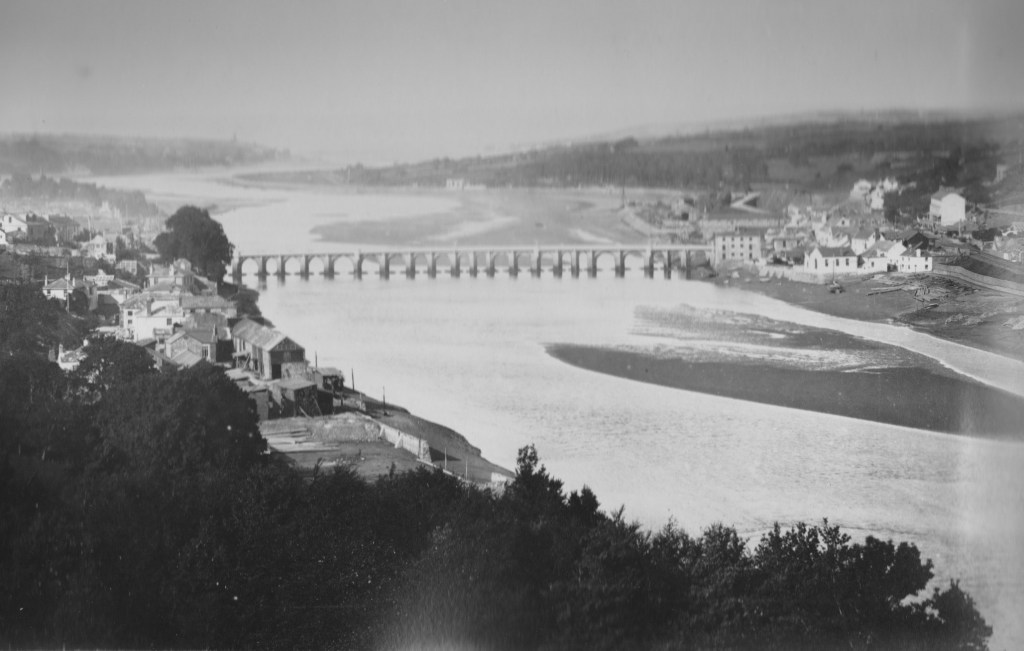
Bideford, East the Water and the Torridge Estuary all have an important maritime and industrial heritage documented back at least to Elizabethan times. This included:
- shipbuilding and repair
- cod fishing off Newfoundland and trading across the Atlantic
- steamers and tourism
- port activities: import and export
- tobacco and timber import
- distribution hub: maritime, road, rail
- emigration
- clay transport and pottery exports
- coal mining and gravel extraction
- lime burning and fertilisers
- salmon fishing
Bideford ships and families were active along the Bristol Channel, to Wales and Ireland and in the exploration and development of North America, establishing the earliest colonies at Roanoke. It was the import of tobacco, and then the Newfoundland cod fishery and trade with southern Europe that brought significant wealth. During the Napoleonic war timber started to be imported from Prince Edward Island and many North Devon families emigrated there.
The wharves along Barnstaple Street were the industrial and commercial hub for Bideford and the estuary. The deep-water channel started to migrate westward across the river and ships became larger so the wharves on the east shore gradually fell into decline. They are surrounded by over 20 listed buildings, including the Grade 1 listed Bideford Long Bridge and the Royal Hotel. Brunswick Wharf was, until 1886, the last shipyard on the eastern shore. Later, Kathleen and May was repaired and berthed here, before she left for Liverpool in 2010.
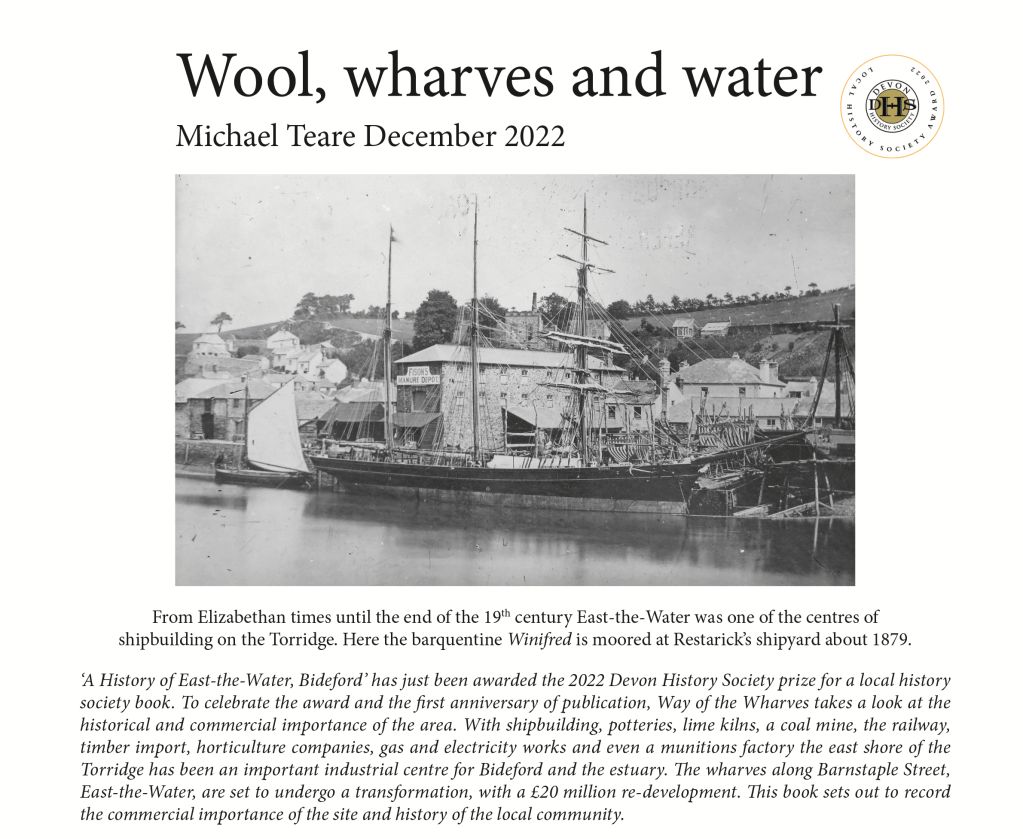
Download the free article ‘Wool, wharves and water’ about the important industrial and maritime history of the wharves at East-the-Water here.

In January 2024 Bideford & River Torridge Heritage Harbour was recognised by the Maritime Heritage Trust. More information on projects and outcomes for Heritage Harbour are found on the website www.barthh.org
 Maritime Heritage Bideford and River Torridge